VLSI Roadmap
A beginner-friendly roadmap for VLSI engineers introducing frontend (design, Verilog, simulation) and backend (synthesis, placement, routing) concepts to build strong fundamentals in chip design and physical implementation workflows.
How to prepare for a VLSI profile from scratch?
If you are a fresher and want to start your career in VLSI and don't know where to start, follow this roadmap to understand the VLSI domain.
First, you should know the types of Semiconductors companies
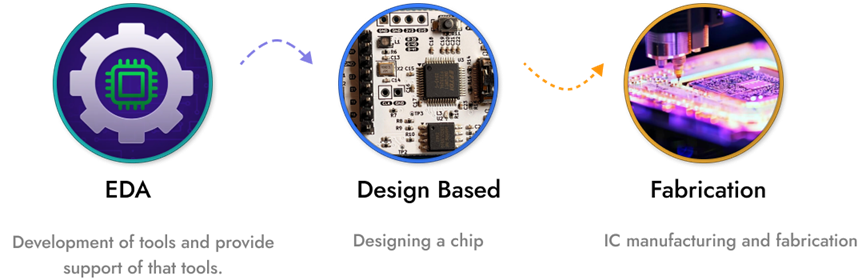
VLSI is mainly divided into two parts
- •There are specific job roles in front-end design and backend design listed below.
- •All stages from logic synthesis to GDS2 are considered as backend design.
Front End Roadmap
Focuses on designing and verifying digital circuits using HDL (Hardware Description Languages).
Back End Roadmap
Focuses on physical implementation, verification, and layout of digital/analog circuits.
Fundamental topics which is essential for every VLSI profile

Theory
- •Digital Electronics
- •Analog Electronics
- •Semiconductor devices physics and technology
- •Aptitude
- •CMOS VLSI DESIGN
- •CMOS Fabrication
- •RC circuits and Network theory

VERILOG
- •Verilog/VHDL
- •SystemVerilog
- •Basic C/C++ programming
- •Scripting (Perl, TCL, Python)

Projects
- •RTL Projects
- •FPGA Implementation
- •Digital Design Projects
- •Tool-specific Projects
All present VLSI Domain Job roles
For RTL Design and Verification Profile
Key Requirements For This Job Role
- Good understanding of digital design along with advanced topics like metastability, CDC basics and STA
- Knowledge of ASIC design flow and FPGA flow
- Good knowledge of Verilog/VHDL/SystemVerilog
- Good knowledge of computer architecture
- Understanding of SystemVerilog basics
For DFT Profile
Key Requirements For This Job Role
- Good understanding of digital design along with advanced topics like metastability, CDC basics and STA
- Knowledge of ASIC design flow
- Good knowledge of Verilog/VHDL
- Knowledge of scripting language such as TCL and Perl
- Good understanding of CMOS design
- Knowledge of scan DFT, BIST related topic: Fault models, Fault coverage, Scan chain insertion, ATPG tool, MBIST and boundary scan
For PD/STA/PV profile
Key Requirements For This Job Role
- Good understanding of digital design along with advanced topics like metastability, CDC basics
- Knowledge of ASIC design flow
- Good knowledge of Verilog/VHDL
- Knowledge of scripting language such as TCL and Perl
- Good understanding of CMOS design
- Good understanding of DRC, ESD, MOSFET, OpAmp, comparators, Oscillators/VCO, PLL
- Basic knowledge of timing analysis (STA)
- Knowledge of floor planning, Placement, CTS, routing, signal integrity, IR drop, EM analysis
For Analog design and layout profile
Key Requirements For This Job Role
- Good understanding of digital design and analog design
- Knowledge of ASIC design flow
- Good knowledge of Verilog/VHDL
- Knowledge of scripting language such as TCL and Perl
- Good understanding of CMOS design
- Good understanding of DRC, ESD, MOSFET, OpAmp, comparators, Oscillators/VCO, PLL
- Knowledge of layout design and voltage and current reference circuits
- Knowledge of analog IC design, DRC checks, antenna checks, parasitic extraction and IR drop
For Memory Design profile
Key Requirements For This Job Role
- Good understanding of digital design along with advanced topics like metastability, CDC basics
- Knowledge of ASIC design flow
- Good knowledge of Verilog/VHDL
- Knowledge of scripting language such as TCL and Perl
- Good understanding of CMOS design
- Good understanding of SRAM and DRAM memory read/write operation and FIFO depth
- Basic knowledge of DRC checks, LVS checks, parasitic extraction
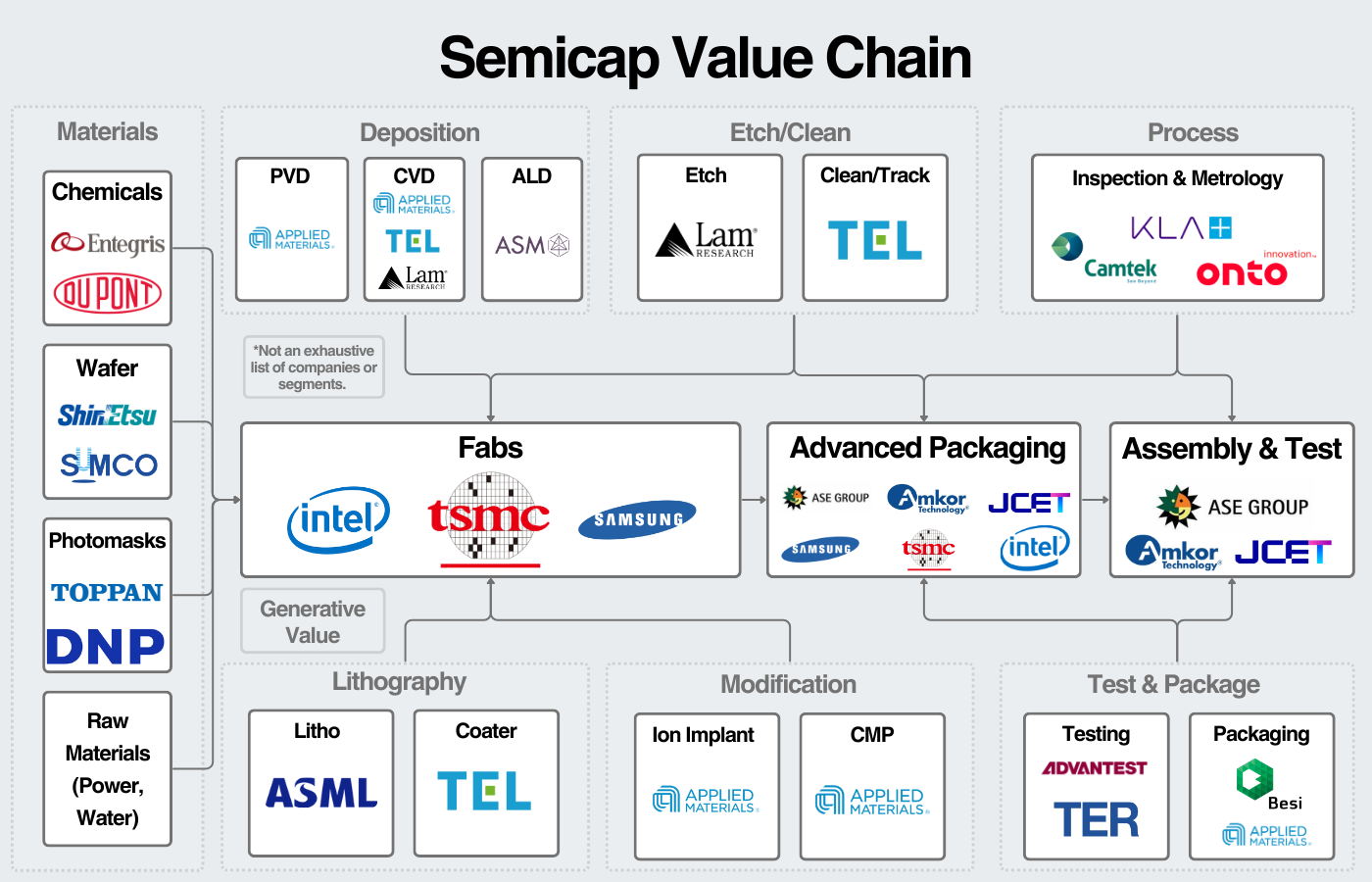
Semicore Value Chain
Comprehensive diagram showing the semiconductor value chain from design to manufacturing
VLSI Interview Checklist
Quick, concise guide covering key concepts, important questions, and must-know topics to ace your VLSI job interview confidently.